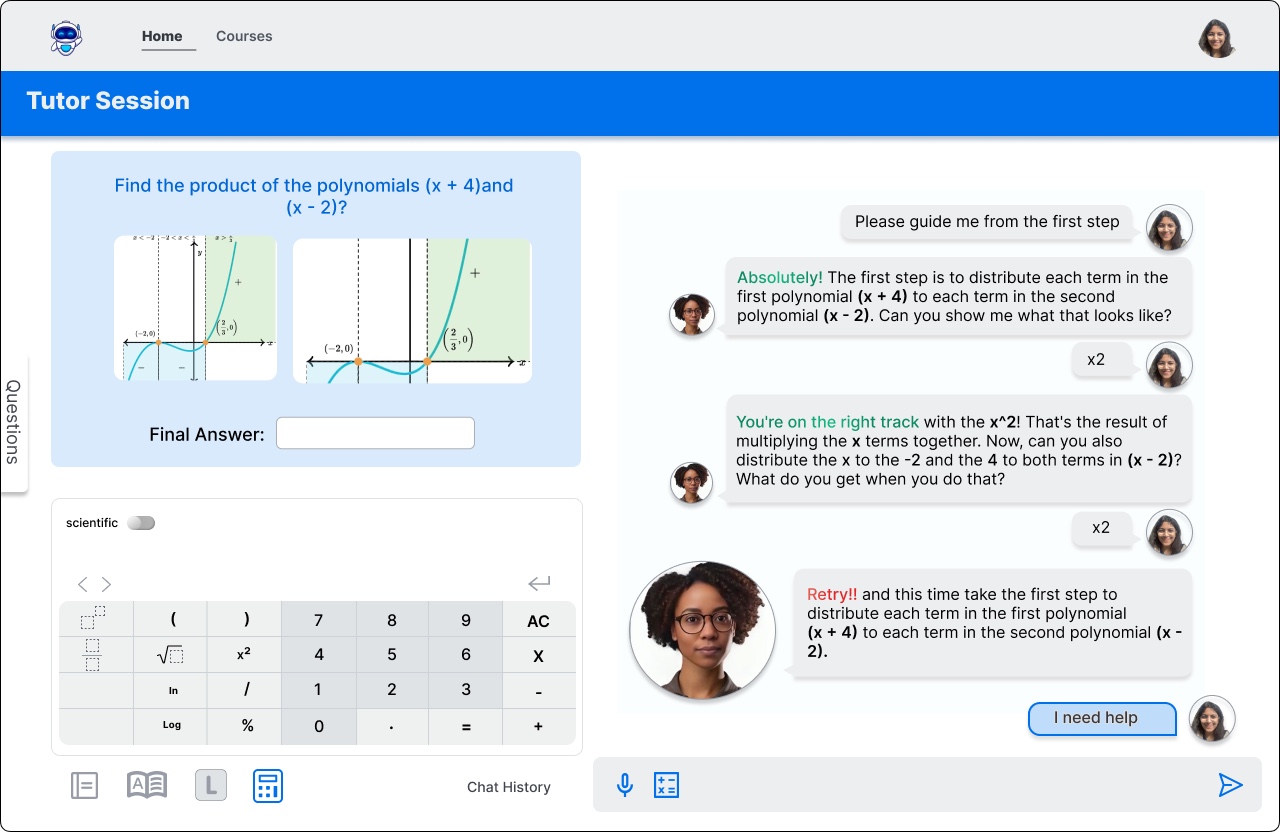
An AI tutor in classrooms across the US.
Thinkverse is a B2B, AI-driven platform for K–12 students, used in schools across the US.
It gives students personalized, real-time support, and gives teachers clear insight into class performance and session activity, so they can guide their class with confidence.
I also built the Thinkverse marketing site, used for outreach and investor pitches: thinkverse.co ↗
Tools: Figma, FigJam, ChatGPT, Slack, Zoom
A tutor with a personality.
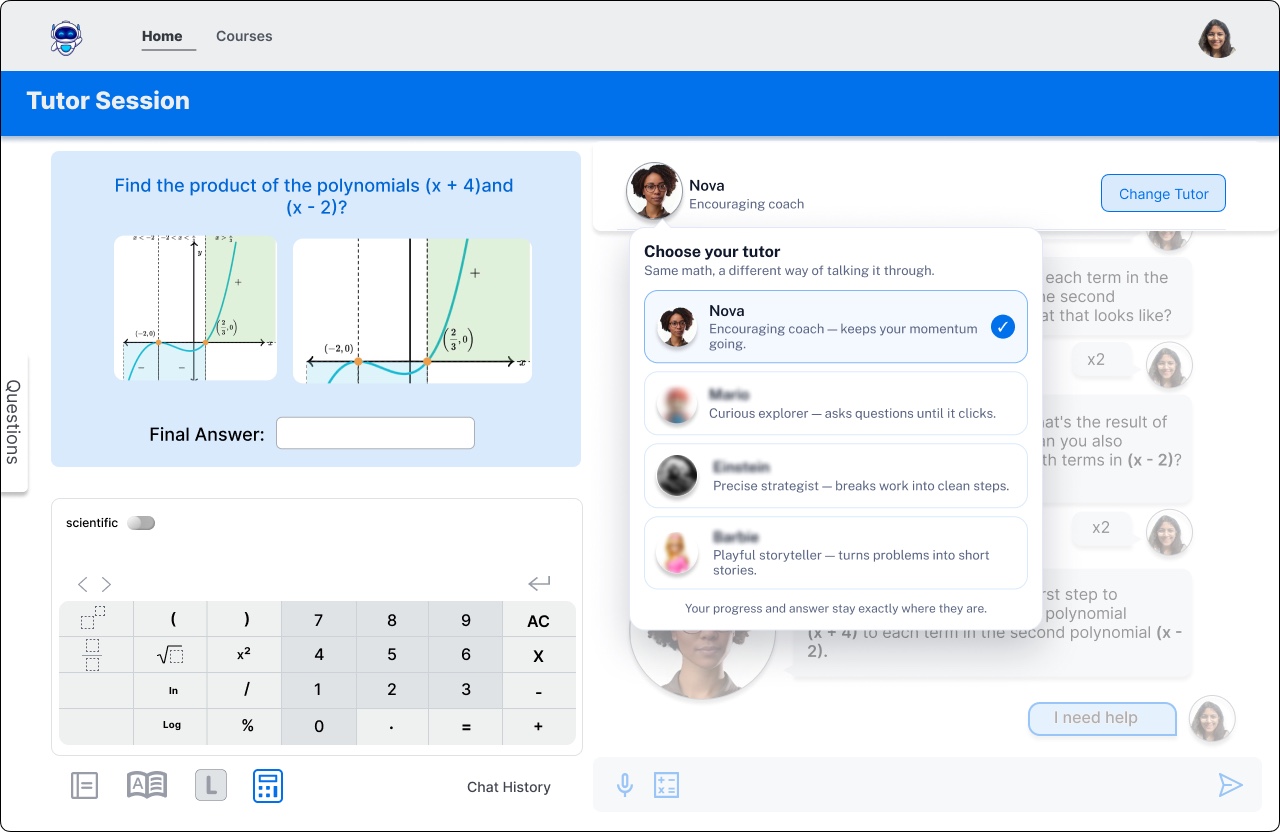
This project focused on the AI tutor experience: a chat-based interface where students solve problems with step-by-step guidance from an AI tutor, presented as a persona such as Barbie, Mario or Einstein.
Students were talking, not solving.
The platform had already deployed AI tutor personas to make the experience more engaging for kids. It worked, just not the way it was supposed to.
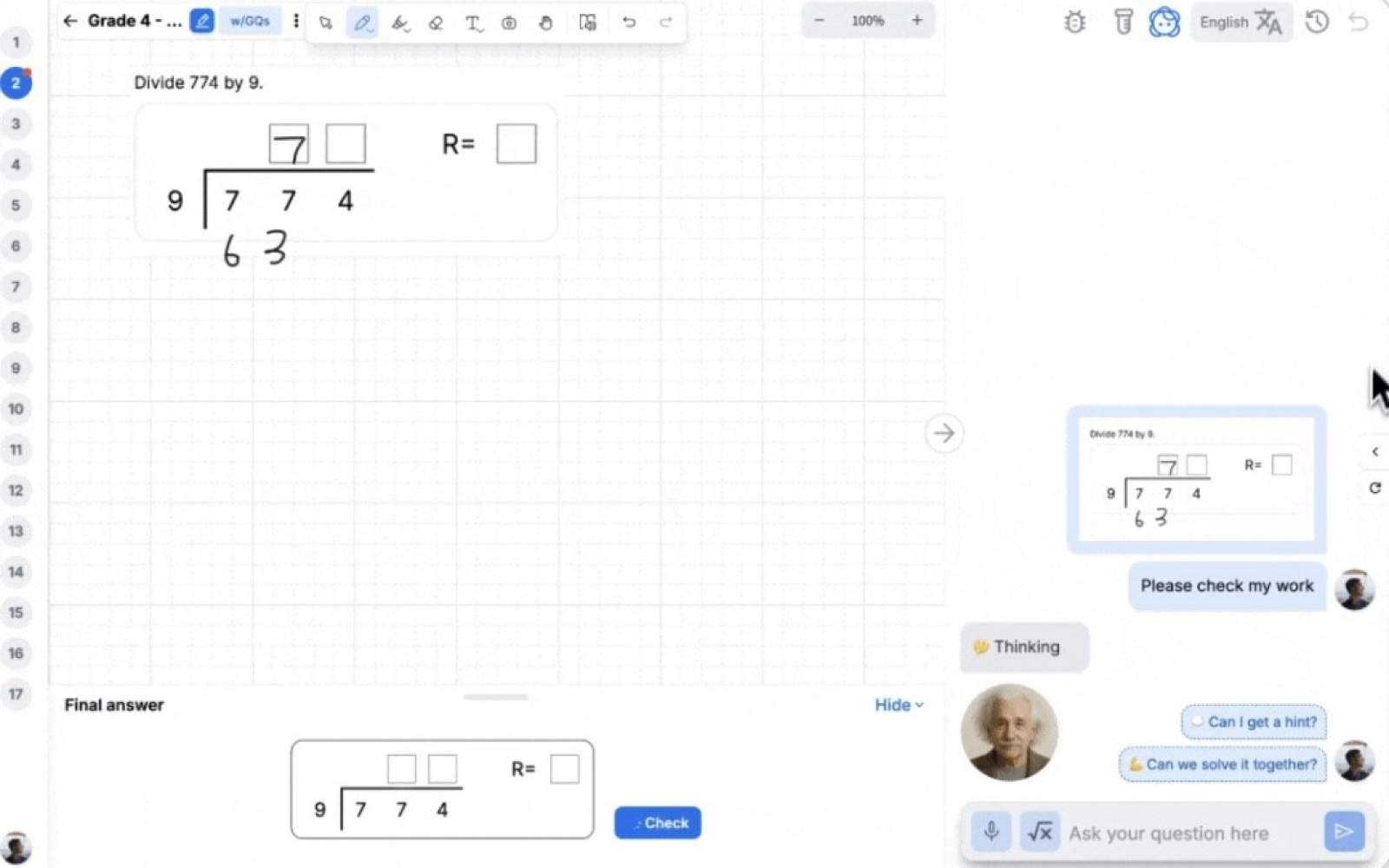
Usability testing showed students treating the tutor as a character to chat with, not a tool to solve problems with. Session times climbed, but problem-solving progress didn't.
The personas were doing their job too well.
Running usability sessions with students surfaced a clear pattern. Kids enjoyed the back-and-forth with "Mario" or "Einstein" more than they engaged with the actual math.
The conversational format was meant to make problem-solving less intimidating. Instead, it became the main activity. The issue was the tutor design, not the content or the difficulty of the problems.
A solve timer that survives a change of tutor.
The wireframed solution introduced a timer tied to the average time it takes a student to solve a comparable problem, not an arbitrary cutoff.
That raised an open question: does the timer survive a student switching tutor personas mid-problem?
Iteration 1: the timer lives in the persistent session header, not inside the tutor switcher, so it holds through every state below.
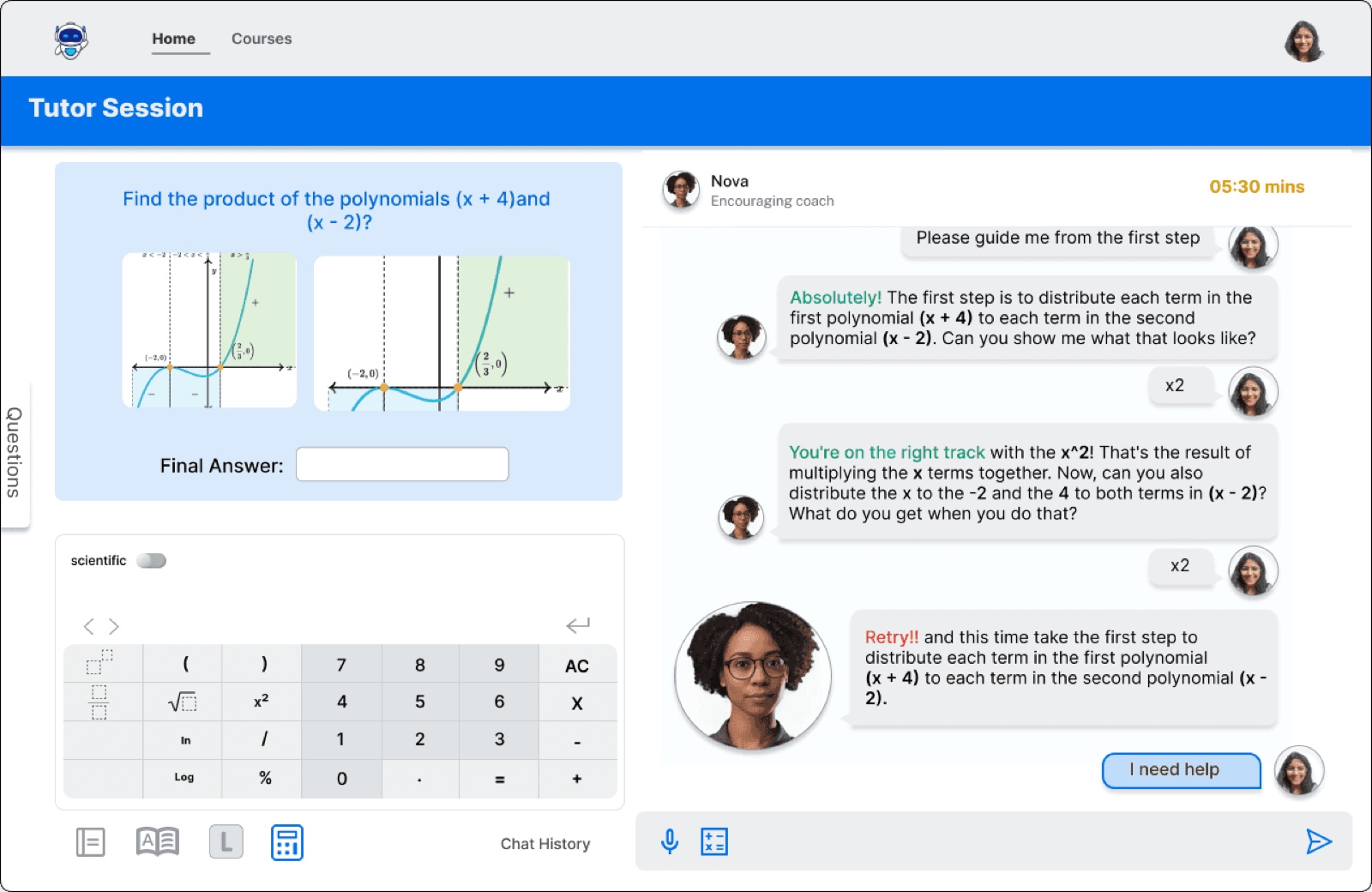
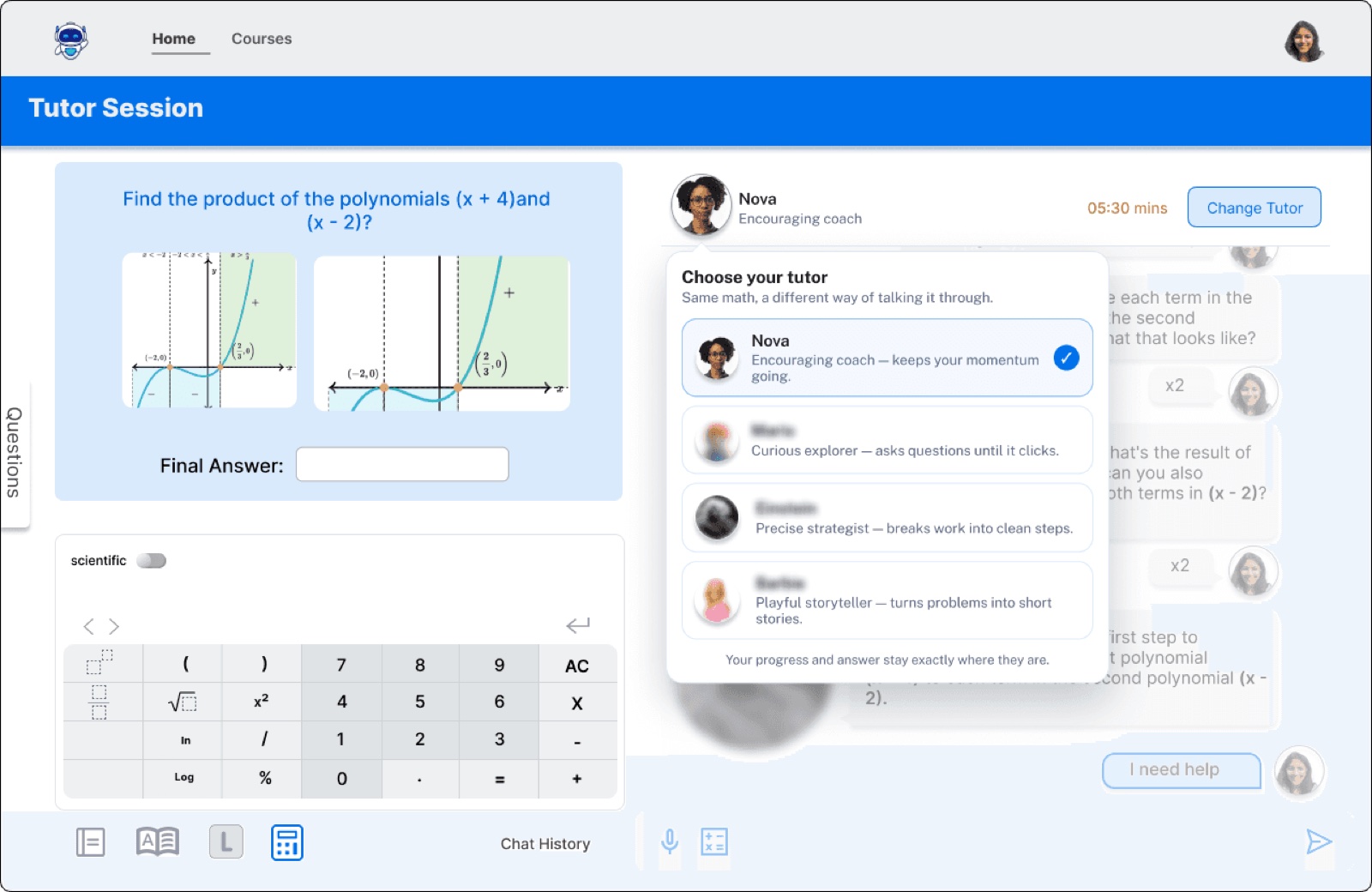
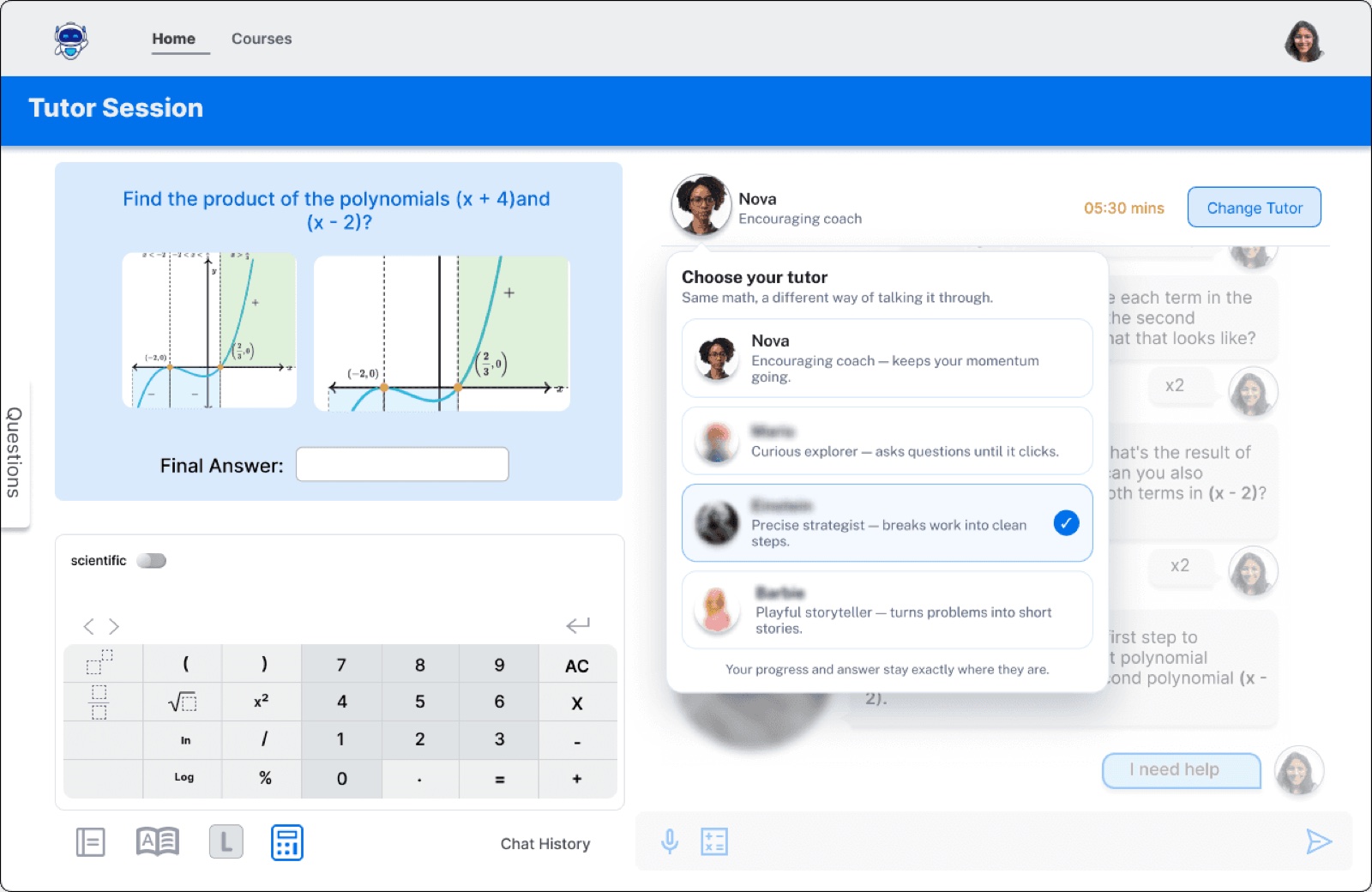
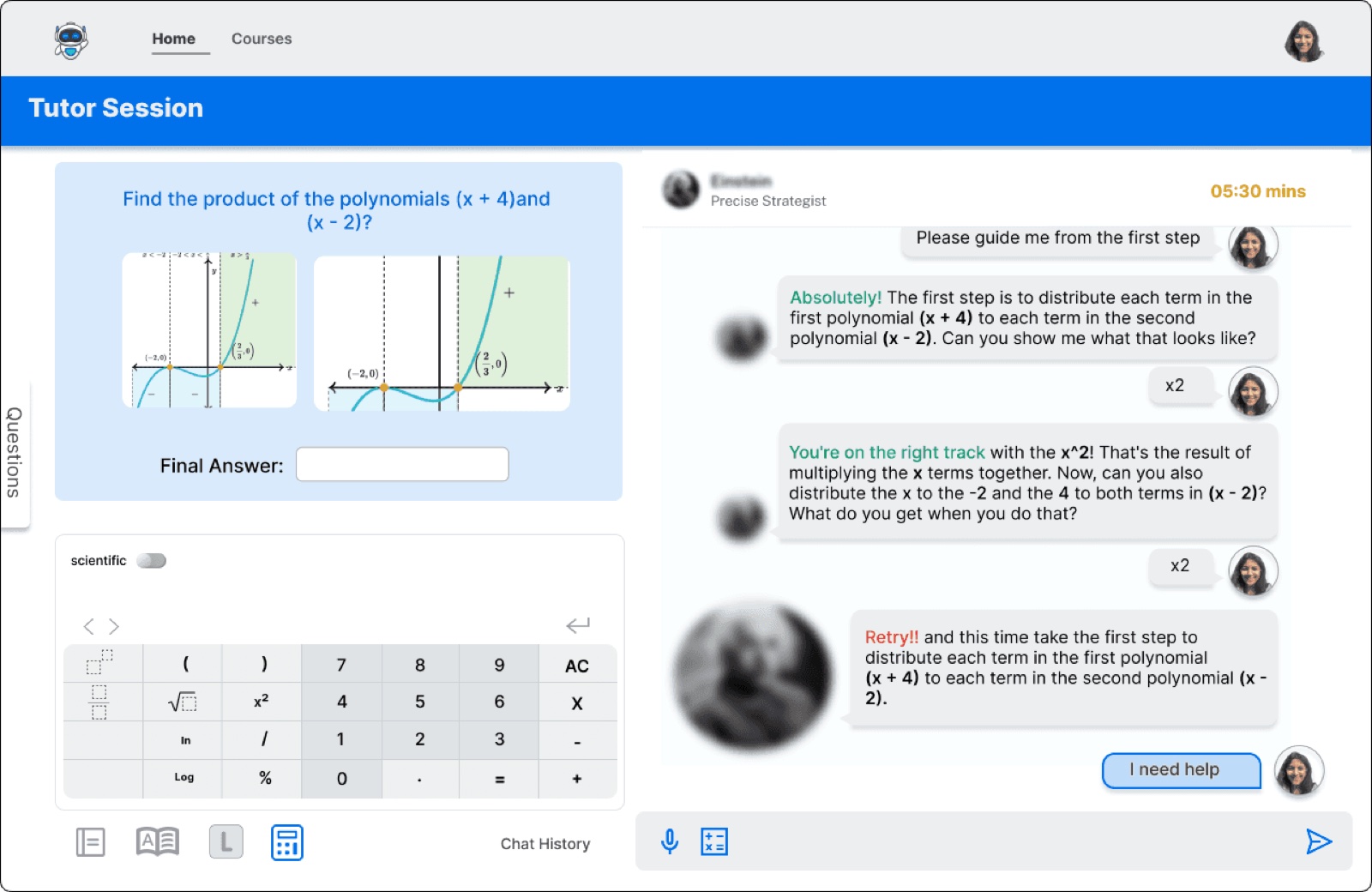
Should the solve timer persist across a persona switch, or reset? I designed it to persist. Resetting would let students use character-switching as an escape from the exact distraction this redesign addresses. That decision, and how each persona's AI behavior should actually differ, was still being worked through with engineering and ML when I left the project.
What three weeks delivered.
Across my wider role at Thinkverse, research with 20+ participants cut task completion time by 40%, and adaptive patterns and heuristic fixes improved product usability by 30%.
What this project taught me.
Engagement isn't learning
A feature can succeed by every surface-level metric and still miss the actual goal.
Design for outcomes
Good AI UX for education means designing for outcomes, not just interaction.
Screens from other Thinkverse projects.
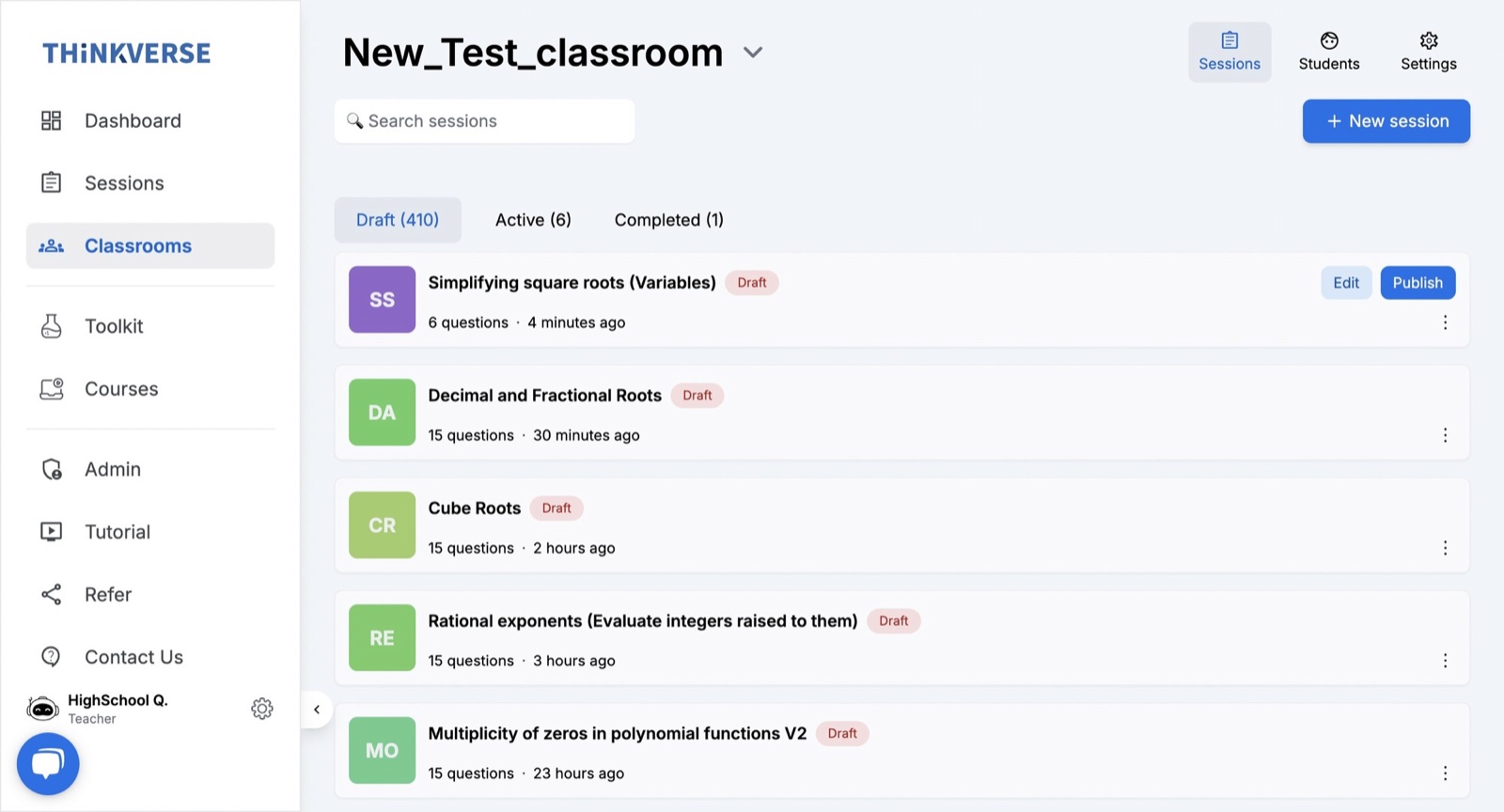
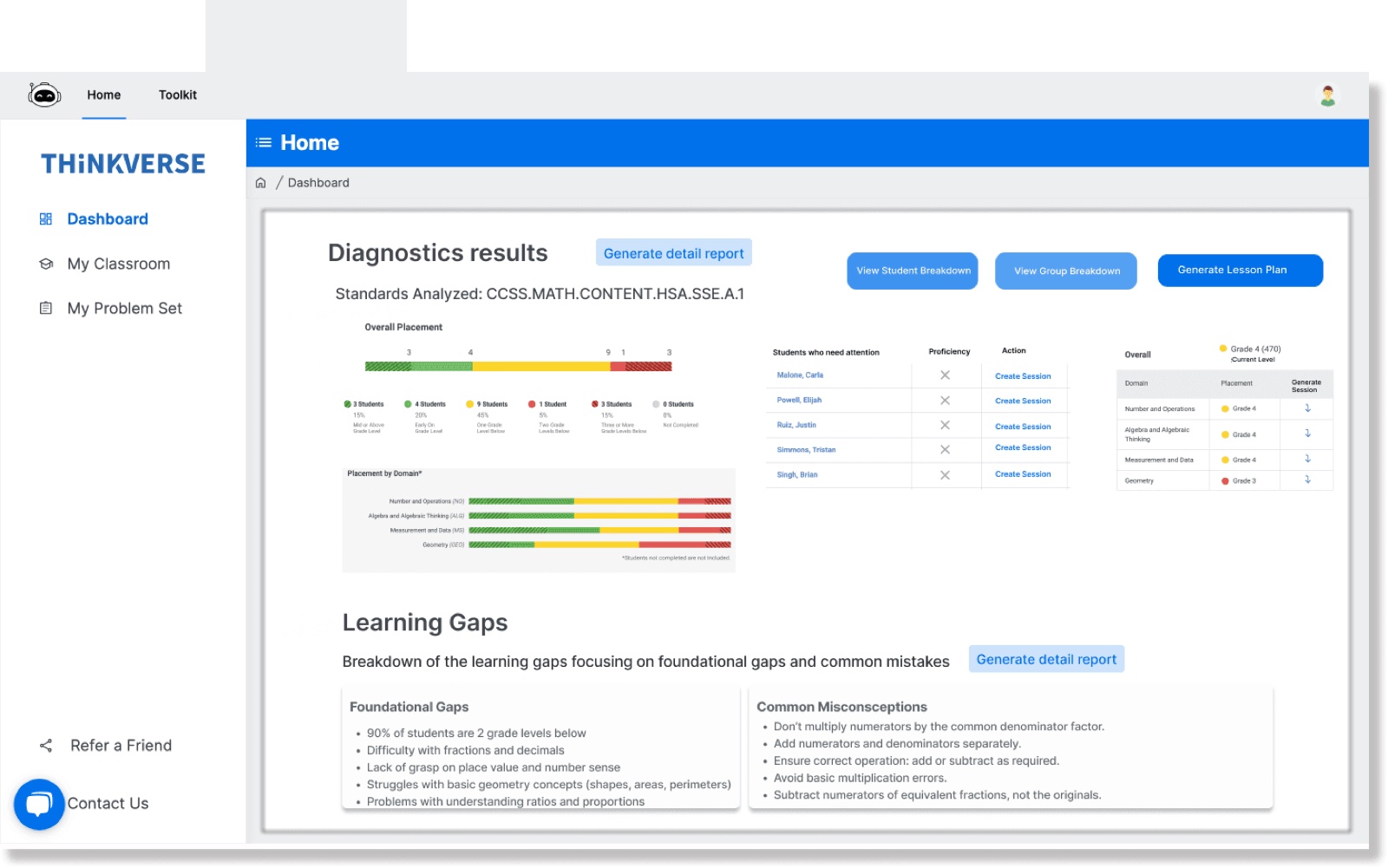
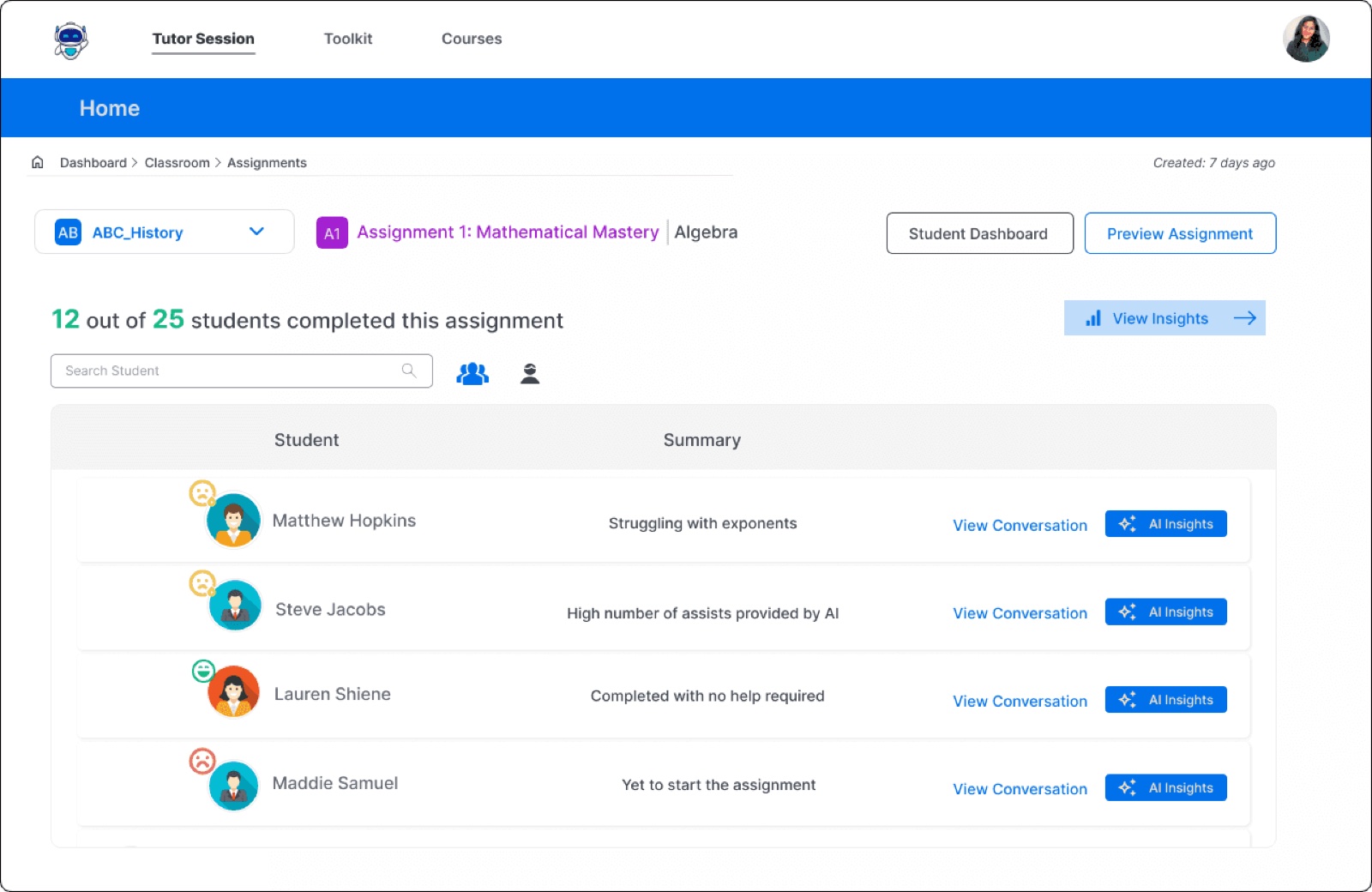
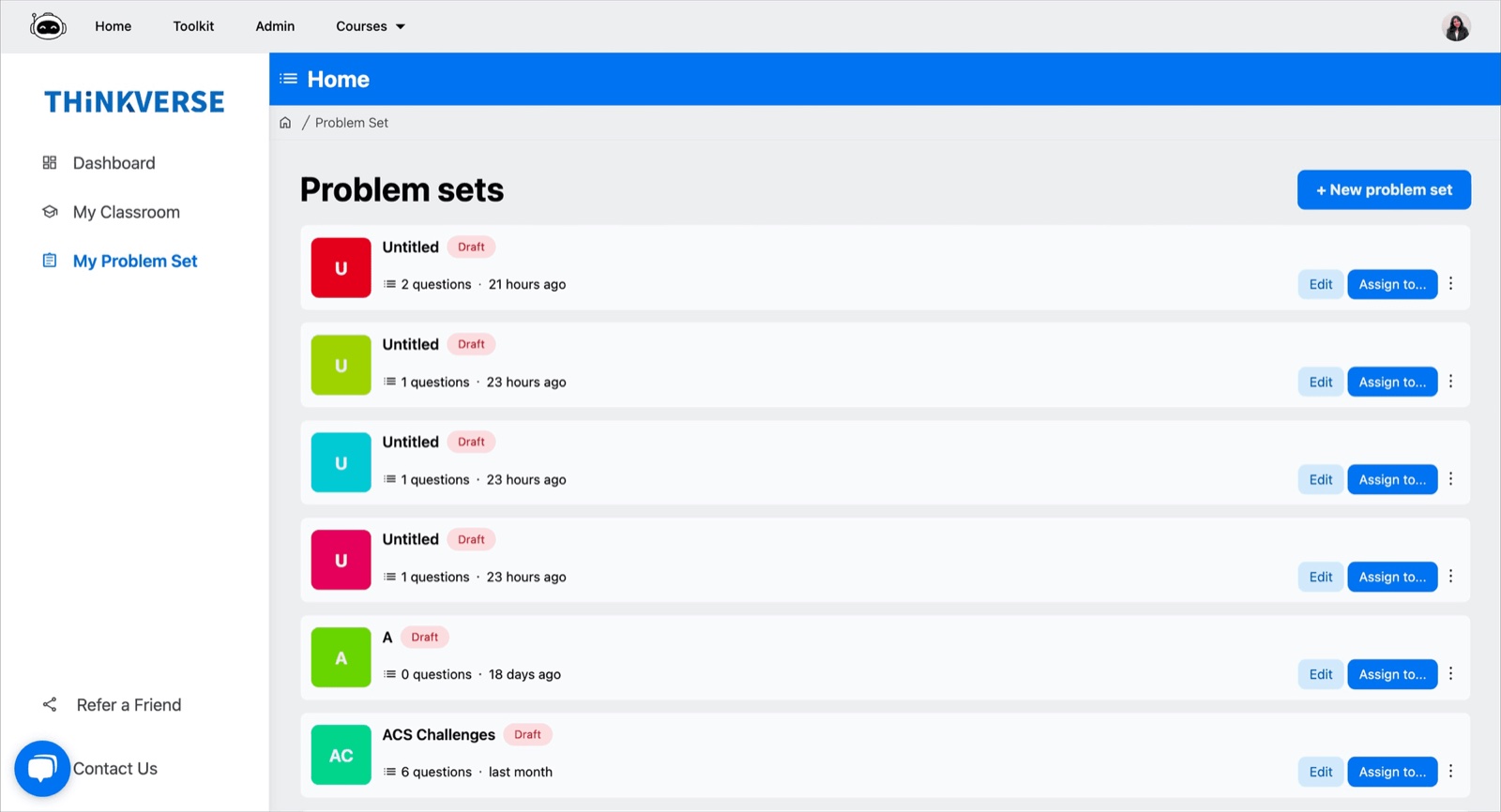
Login and sign-up flow.
A second Thinkverse case study covers the login and sign-up flow for teachers and students.
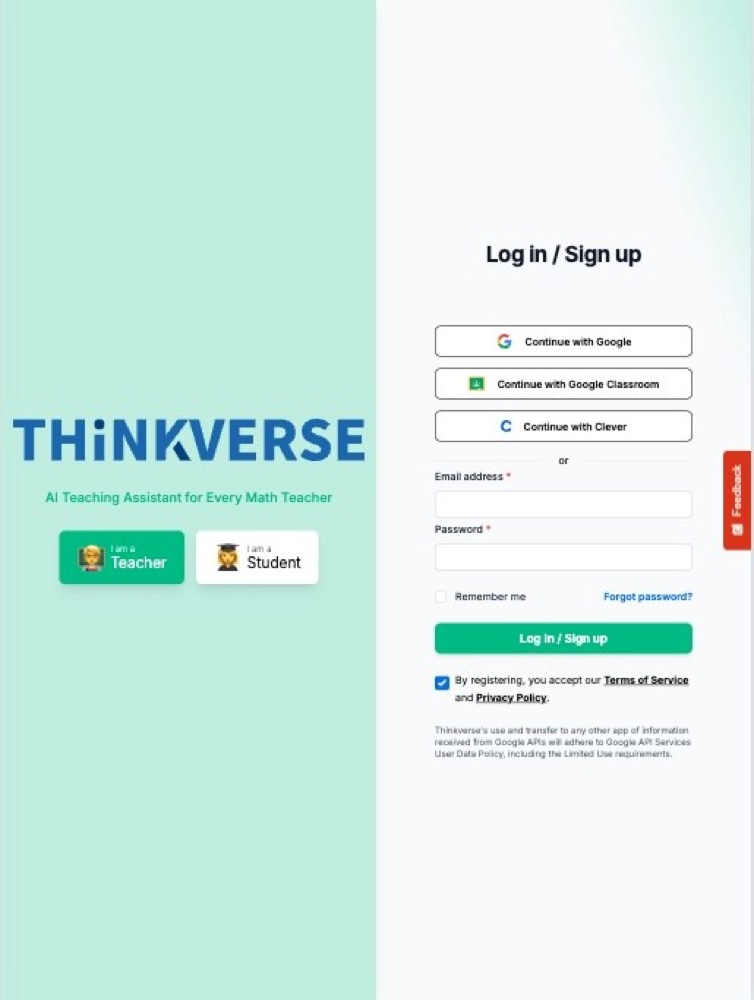 Thinkverse · Case studyLogin / Sign-up flowRead the case study ↗